


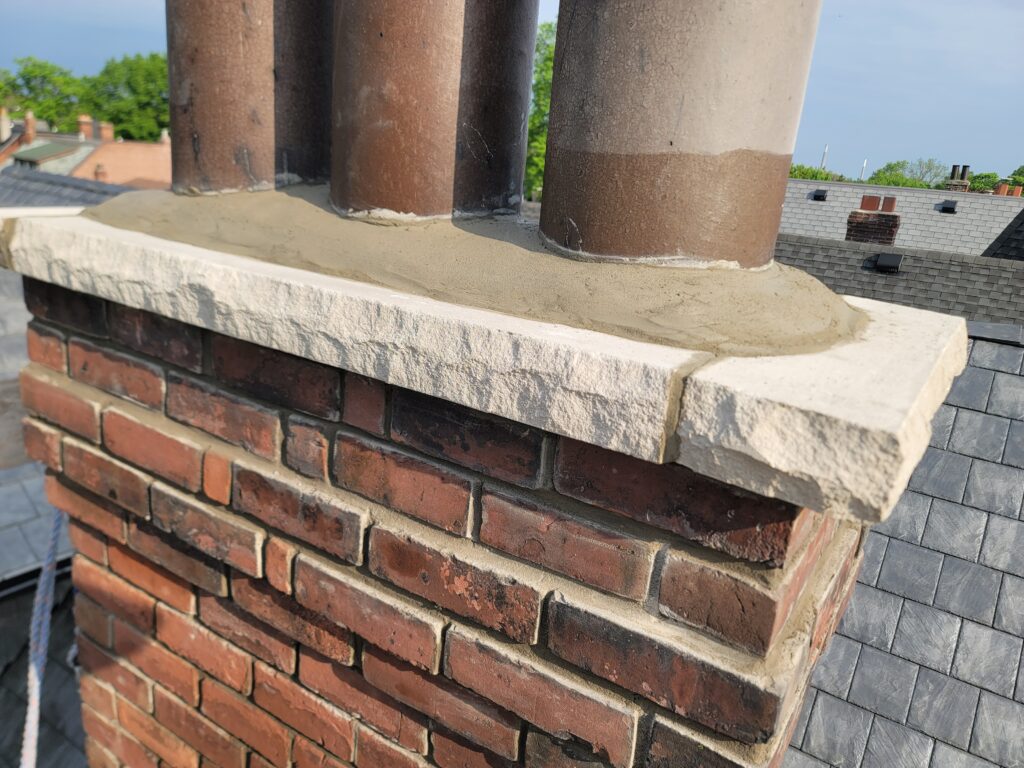
Do you live in Mississauga or Oakville and your chimney is “weeping”? Before you tear it down, check the grout!
Many homeowners panic when they see crumbling joints or moisture on their chimney. Their first thought? “It needs to be rebuilt.” Stop! In most cases, professional grouting is all that is needed to save the structure and thousands of dollars in your wallet.
When does a chimney need saving?
A chimney above the roof is exposed to the harshest conditions: rain, frost, and huge temperature differences. Over time, the mortar washes out and crumbles, opening the way for water. If you notice:
empty spaces between bricks,
moisture penetrating the interior of the building,
loose individual bricks,
it's a sign that it's time to take action. But don't worry – “action” does not necessarily mean a team with pickaxes.
Why is grouting the best solution?
Huge savings: Rebuilding a chimney costs several thousand dollars (materials, labor, scaffolding, debris disposal). Repairing the joints alone costs a fraction of that amount.
No demolition: The work is limited to the outside of the chimney. You avoid mess in your home, dust, and the risk of damaging the roof covering during demolition.
Instant results: Professional joint filling and possible clinker impregnation restore tightness in one day.
How to do it right?
Instead of rebuilding, opt for renovation:
Cleaning the joints: Remove loose, weathered mortar to a depth of approx. 1.5–2 cm.
Suitable mortar: The key is to use mortar that is resistant to frost and high temperatures, preferably with the addition of trass (prevents efflorescence).
Watertightness from above: It is often enough to repair the chimney cap to prevent water from pouring into the wall structure.
Summary
Don't be persuaded to undertake a costly reconstruction if the chimney structure is stable. Often the problem is not a “bad chimney” but simply “worn mortar.” Invest in proper sealing – your chimney will regain its tightness and you will save money for other household expenses.
We provide services in three cities: Mississauga, Oakville, Toronto.
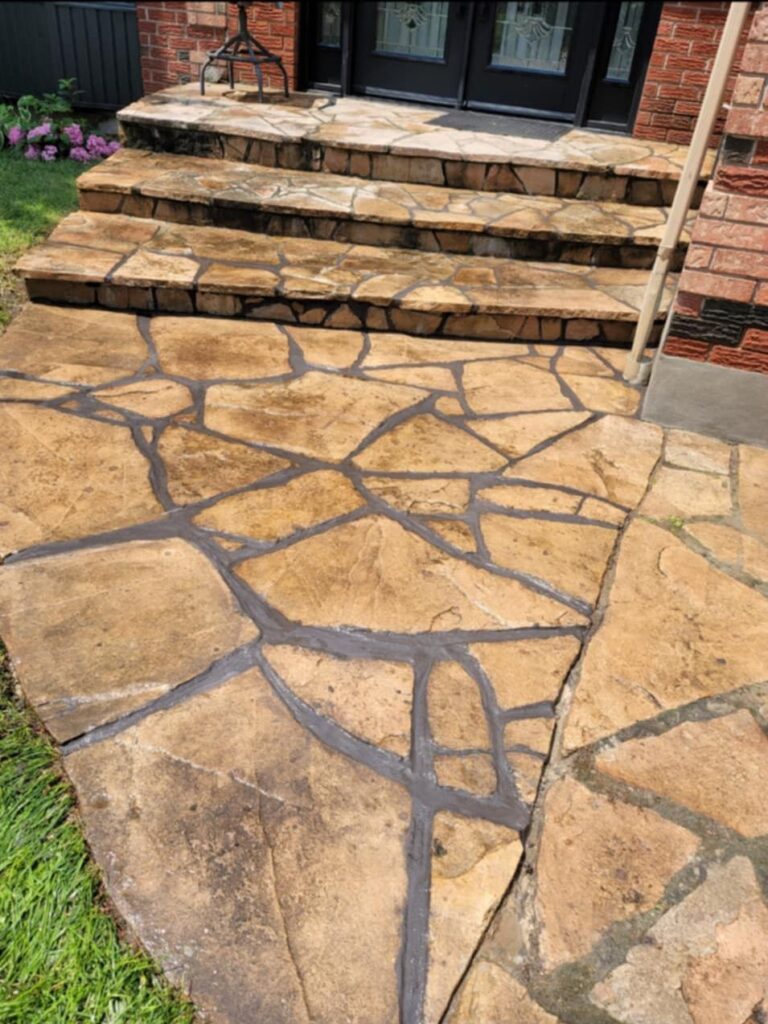
Repairing a flagstone path (irregularly shaped slabs) requires good timing and quick response to the first signs of damage to avoid having to replace the entire surface in 2026.
1. When is the right time to repair?
Season: The best time is spring or early fall, when temperatures remain stable above 5-10°C and humidity is not extremely high.
Weather conditions: Avoid repairs during hot weather (the stone must not be heated in certain spots) and during periods of frost, which prevent adhesives and mortars from setting properly.
2. What to look for (signs of failure)?
Before calling a professional, check the condition of the path for these signs:
Slab movement: If the slabs move under body weight, this indicates loosening of the foundation or washing out of the bedding.
Cracked joints: Even small gaps in the joints are critical. In 2026, with variable freezing cycles, water penetrating these gaps will quickly break up the stone from the inside.
Efflorescence and deposits: White spots may indicate drainage problems under the slabs, leading to their chemical degradation.
3. When to call a professional?
When you notice parts of the path sinking – simply adding sand usually does not solve the problem of deeper soil destabilization.
When large slabs have broken in half, they need to be professionally glued with epoxy resins or replaced to maintain the aesthetics of the entire path.
When the grouting is falling out in patches, amateur filling with new mortar on top of the old usually does not last long; a professional must clean and prepare the substrate mechanically.
4. How to avoid higher costs in 2026?
The “small steps” principle: The cost of grout replacement is a fraction of the price you will pay for dismantling and re-laying slabs that have cracked due to ice.
We provide services in three cities: Mississauga, Oakville, Toronto.
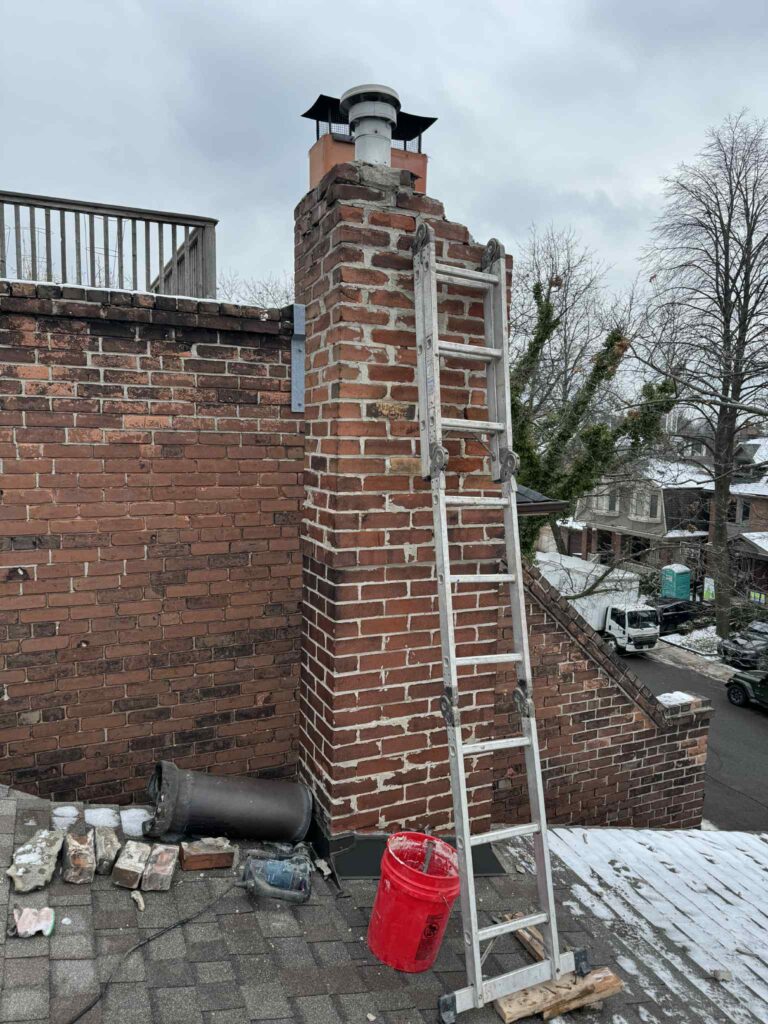
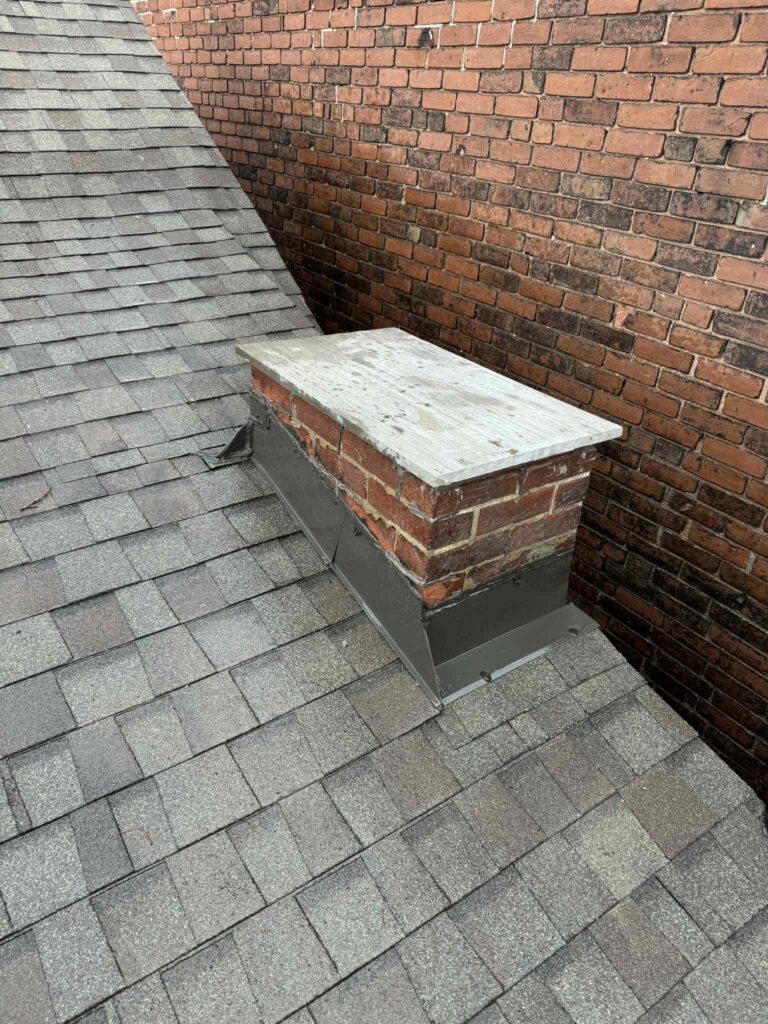
Removing an unused chimney is a common decision during thermal modernization or roof replacement in Toronto, Mississauga, Oakville and other cities in 2026. Removing an unnecessary element improves the aesthetics of the house and eliminates the risk of leaks.
What to do with an unused chimney? Two proven methods of removal
Modern heating systems, such as heat pumps, often make traditional brick chimneys redundant. An unused chimney is not only a waste of space, but also a potential source of heat loss (a so-called thermal bridge) and a risk of leaks in the flashing.
If you plan to get rid of your chimney, you have two main solutions to choose from. Each has its advantages and depends on the scope of the planned renovation.
Option 1: Securing the chimney above the roof (the “slab” method)
This solution is most often chosen when we do not plan to replace the entire roof covering in the near future.
What it involves: The chimney remains in its current external form. It is cleaned and then sealed from above with a concrete cover plate or a special steel cap.
Advantages:
Low cost: No interference with the roof structure or roofing work is required.
Speed: The work can be completed in one day.
Building aesthetics: The shape of the house remains unchanged, which is important for houses with traditional architecture.
Important: Remember to leave a small ventilation opening inside the unused flue to prevent moisture condensation.
Option 2: Demolition below the roof line (“full concealment” method)
This is the most aesthetic and technically “clean” solution, ideal when replacing tiles or shingles.
What it involves: The chimney is demolished down to the attic level (below the rafters). The resulting hole in the roof is patched up – missing patches, a membrane, and new roofing (tiles or shingles) are installed in this area so that the chimney site becomes completely invisible.
Advantages:
No thermal bridge: You can thoroughly insulate the chimney site, keeping the heat inside the house.
No more leaks: You eliminate the most critical point of the roof, i.e., the flashing around the chimney.
Modern look: The roof becomes a uniform, smooth surface.
Important: This method requires spare roof tiles or matching new shingles, which may differ slightly in color from those that have been exposed to the sun for years.
Which method should you choose?
If your roof is in good condition and you don't want to incur high costs, choose the panel (Option 1).
However, if you are planning to renovate your roof or want to forget about chimney maintenance once and for all and improve the energy efficiency of your building, demolition below the roof (Option 2) will be the best investment.
Need help choosing or pricing the work? Contact us! We will professionally assess the condition of your roof and help you make the best decision.
We provide services in three cities: Mississauga, Oakville, Toronto.